
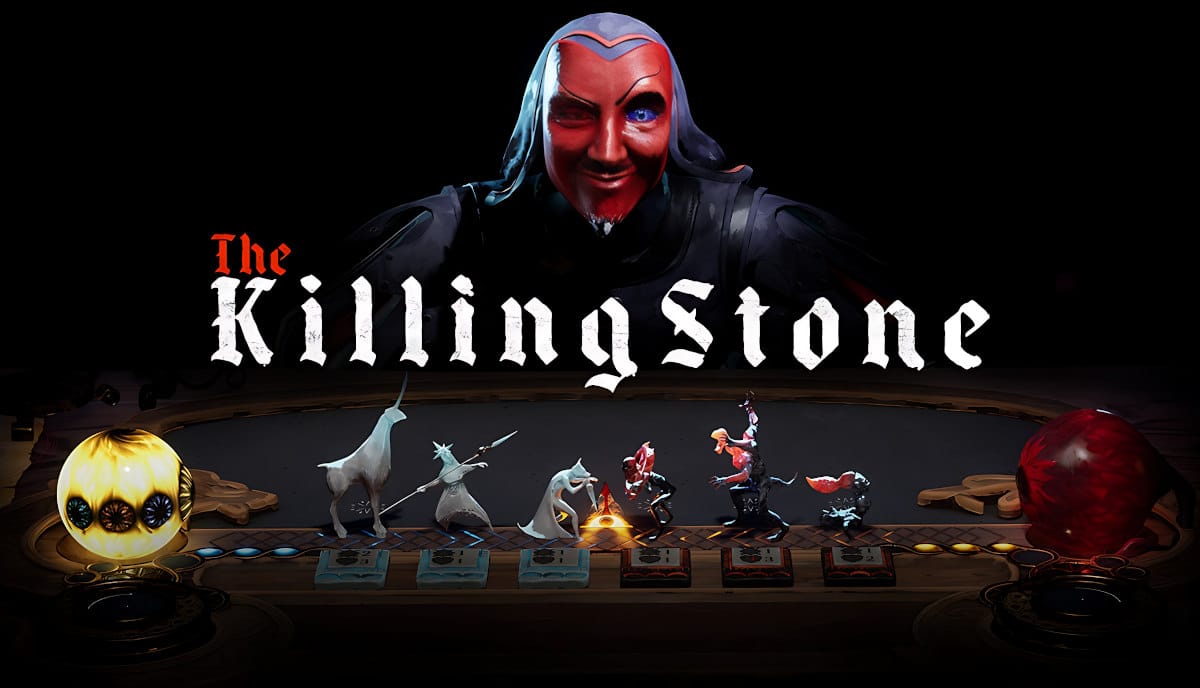
The Killing Stone is a single-player horror deckbuilder game creeping onto Linux and Steam Deck through its Windows PC release. Powered by the ongoing creative vision of developer Question. Which is ready to release soon on Steam.
If you like card battlers that feel alive, and horror that crawls under your skin instead of jump-scaring you to death, The Killing Stone might already be whispering your name. I felt it the moment I dug in. This is one of those games that doesn’t just want your attention, it wants your soul.
This new horror deckbuilding card battler comes from Question, the same studio that gave us The Blackout Club and The Magic Circle. If you’ve played either, you already know they don’t do “normal.” They do unsettling, intimate, and they do titles that stick with you long after you shut your PC down.
I can also say for sure that many folks on the dev team and our QA partners have played the game quite a lot on Steam Deck and have found no significant issues running the game with good performance. It’s my preferred way to play.
According to the email from Question, supporting natively would require a strong push from the community, especially to clearly highlight what Proton can’t fully cover. That said, Linux and Steam Deck players shouldn’t face many hurdles when playing The Killing Stone. The developers have already completed some early compatibility testing, and expect they’ll be able to fix any Linux-specific issues if major problems show up on certain distros or configurations when running the Windows build through Proton on Steam.
The Killing Stone launches on Steam on February 18, 2026. The release will certainly be playable via Proton, and there’s a free demo up right now. No commitment. Just curiosity. And maybe a little dread.
The Killing Stone – Launch Date Trailer
What makes this one special is how close everything feels. You’re not staring down at a flat board. You’re standing over it. The entire single-player horror deckbuilder is due to play out in first person, with a ceremonial game board centered around the Fanghella. Also known as the Killing Stone itself. Creatures aren’t just cards. They’re physical figurines. They shimmer, threaten, and feel like they’re waiting for you to mess up.
You play as the Maven, unraveling the grim legacy of Mariken Svangård in the 17th century Arctic Circle. Cold, isolated, and spiritually rotten. Since every demon you face is tied to a contract. Every contract is signed in blood. Win, and you gain power, but also permanent consequences. Lose, and… well, horror titles aren’t known for mercy.
The Reserve system is where things really click. You’re stacking creatures and incantations above the battle line, holding them back, while gambling on the future. It’s tense in that quiet, chess-clock way. One bad call can poison your deck for the rest of the release. One smart bargain can also carry you all the way to the Devil himself.
And yeah, the The Killing Stone presentation is doing real work here. The audio is haunting without being obnoxious. Since the story can be played in authentic 17th-century English or modern prose, which is such a nerdy flex and Iike it. Voice performances come from Emma Gregory (you’ll recognize her from Baldur’s Gate 3) and also Liam O’Brien of Critical Role fame. It lands. Hard.
For Linux players especially, this feels like a win for Steam Deck as well. A stylish, performance-friendly, single-player horror deckbuilder that respects your brain and your platform. No live service nonsense. No grind for the sake of grind. Just strategy, atmosphere, and consequences.
The Demo
Wishlist it on Steam. Try the game demo. Sit with it for a bit.
The Killing Stone isn’t loud about what it’s doing, but once it gets its hooks in, you’ll feel it.